
Multiple Sclerosis & Demyelinating Disorders
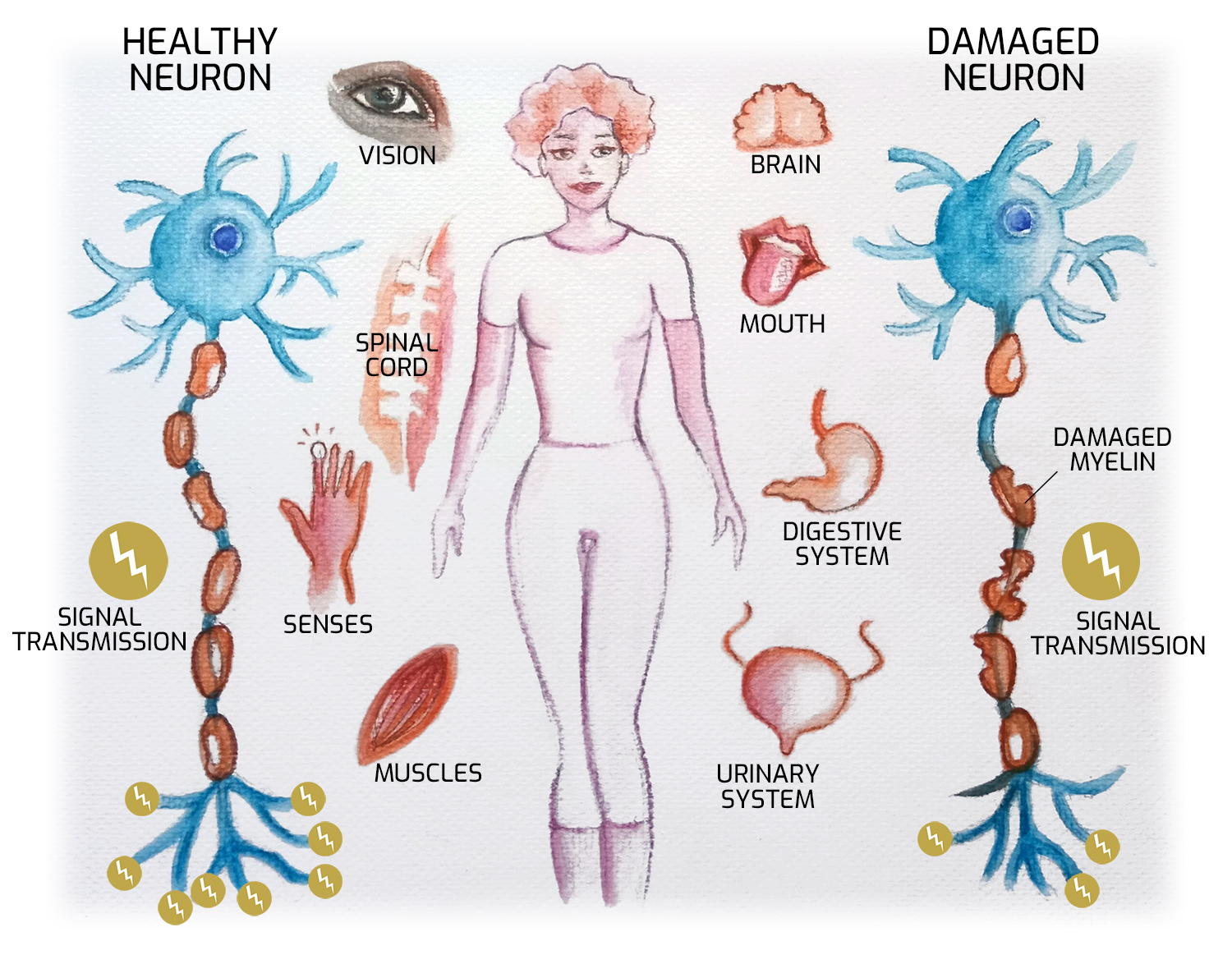
Multiple Sclerosis, commonly called MS, is a neurological condition that affects the brain and spinal cord. It happens when the protective covering of nerves, called myelin, gets damaged. When myelin is affected, messages between the brain, spinal cord and body may slow down or get interrupted.
Demyelinating disorders are a group of conditions where this protective nerve covering is affected. MS is one of the common demyelinating disorders, but there are other related conditions too. Symptoms can vary from person to person and may appear in episodes.
This page explains MS and demyelinating disorders in simple language, what symptoms to watch for, and how neurological evaluation helps. You can also explore other neurological conditions on the Treatments page.
Why Symptoms May Come and Go
One important feature of MS is that symptoms may appear suddenly, improve partially or fully, and then return later. This can confuse patients because they may feel better after a few days or weeks and think the problem has gone completely.
The MS Society UK guide on MS explains that people can have symptoms that come and go or continue in different ways.
These symptom episodes may involve vision, balance, sensation, strength, bladder control or coordination.
Symptoms That Need Attention
MS and other demyelinating disorders can affect different parts of the nervous system. Symptoms depend on where the nerve covering is affected.
Patients may notice:
- Blurred vision or loss of vision in one eye
- Pain with eye movement
- Numbness or tingling in arms, legs or one side of the body
- Weakness in one or both legs
- Difficulty walking or imbalance
- Dizziness or coordination problems
- Electric-shock sensation in the back or limbs
- Bladder urgency or difficulty controlling urine
- Unusual fatigue
- Double vision
- Symptoms that improve and then come back later
The MS International Federation explanation of MS explains that damage to myelin can make nerve messages harder to pass through, causing symptoms of MS.
MS Is Not Diagnosed by Symptoms Alone
Many symptoms of MS can look similar to other neurological conditions. Numbness may happen in neuropathy. Weakness may happen in stroke, spine disease or muscle disease. Vision symptoms may have eye-related causes too.
That is why diagnosis should not be made only by reading symptoms online.
A neurologist looks at the full pattern:
- Which symptom started first
- How long it lasted
- Whether it improved or returned
- Which part of the body was affected
- Whether vision, balance, bladder or walking was involved
- MRI findings
- Blood tests and other reports
- Whether other conditions need to be ruled out
This careful approach helps avoid both missed diagnosis and unnecessary fear.
Diagnosis and Evaluation
Evaluation may include neurological examination, MRI brain and spine, blood tests, vision-related tests, nerve tests or cerebrospinal fluid testing in selected cases.
The aim is to understand whether the symptoms fit MS, another demyelinating disorder, or a different neurological condition.
Not every patient needs every test. The decision depends on symptoms, examination findings and previous reports.
Patients who want to know more about the doctor’s clinical background can visit the About page.
Treatment Approach
Treatment depends on the diagnosis, type of demyelinating disorder, severity of symptoms, relapse pattern, MRI findings and overall health.
The treatment plan may include:
- Treatment of acute relapse, when needed
- Medicines to reduce future disease activity in selected patients
- Symptom management for pain, stiffness, fatigue or bladder symptoms
- Physiotherapy and balance support
- Vitamin and general health review
- Regular follow-up and MRI monitoring when advised
- Counselling about relapse warning signs
Some patients need short-term treatment during an attack. Others may need long-term medicines to reduce future relapses or disease activity. Treatment should be individualised and monitored carefully.
When Should You Consult a Neurologist?
Consultation is important if symptoms are new, unexplained, recurring or affecting vision, walking, balance, sensation or bladder control.
Medical evaluation is especially important if there is:
- Sudden or repeated vision loss
- Numbness or weakness lasting more than a few hours
- Walking difficulty or imbalance
- Repeated episodes of neurological symptoms
- MRI showing demyelinating lesions
- Bladder symptoms with leg weakness or numbness
- Double vision or coordination problem
Sudden weakness, facial deviation, speech difficulty or severe acute neurological symptoms should be treated as an emergency.
Multiple Sclerosis & Demyelinating Disorder Consultation
Dr. Anadi Mishra provides consultation for suspected MS, demyelinating disorders, recurrent neurological episodes, optic neuritis-like symptoms, numbness, weakness, imbalance, MRI lesion review and relapse-related concerns at Axiom Neurology & Speciality Clinic, Ashiyana, Lucknow.
The focus is on understanding the symptom pattern, reviewing MRI and reports carefully, ruling out similar conditions, and explaining the treatment plan in simple language.
Patients can book an appointment for consultation. For clinic address, timing and phone details, visit the Contact Us page.
FAQs
No. MS affects the brain and spinal cord. Neuropathy usually affects peripheral nerves outside the brain and spinal cord. Symptoms can overlap, so evaluation is important.
Yes. In many patients, symptoms may appear as episodes, improve partially or fully, and return later. This is why repeated neurological symptoms should be checked.
MRI is commonly used to look for demyelinating lesions in the brain and spinal cord. It helps the doctor understand the pattern and plan further evaluation.
Many patients can be managed with proper diagnosis, relapse treatment when needed, long-term medicines in selected cases, symptom control, rehabilitation and regular follow-up.

Dr. Anadi Mishra
Consultant Neurologist
Dr. Anadi Mishra
Hey, how can I help you today?
Powered by Elementor